

Learn and grow amid southwestern splendor!
Located in a sweeping valley surrounded by picturesque mountains, the University of Arizona College of Nursing in Tucson offers educational excellence and cultural diversity. Whether you are in one of our online graduate programs or take all your courses on our spectacular campus, you’ll have access to the very best learning resources and opportunities.
We respectfully acknowledge the University of Arizona is on the land and territories of Indigenous peoples. Today, Arizona is home to 22 federally recognized tribes, with Tucson being home to the O’odham and the Yaqui. The University strives to build sustainable relationships with sovereign Native Nations and Indigenous communities through education offerings, partnerships, and community service.
Mission
We innovate nursing and interdisciplinary education, practice, research, and service to develop leaders, address healthcare challenges, and promote health, equity and inclusiveness.

VISION
To lead the advancement of nursing for transforming healthcare in our community, the State of Arizona, and the world.
Values
- Integrity
- Compassion
- Exploration
- Adaptation
- Inclusion
- Determination
Highly Ranked
The University of Arizona—one of the country’s most respected research institutions—is a leader in health sciences education and scholarship. The College of Nursing is ranked among the top 4% of nursing programs in the United States.
As one of 21 colleges at the UA, and one of five colleges comprising the UA Health Sciences, the College of Nursing offers a wealth of educational resources. In addition, Banner – University Medical Center Tucson provides exceptional clinical and research opportunities.
A Wealth of Resources
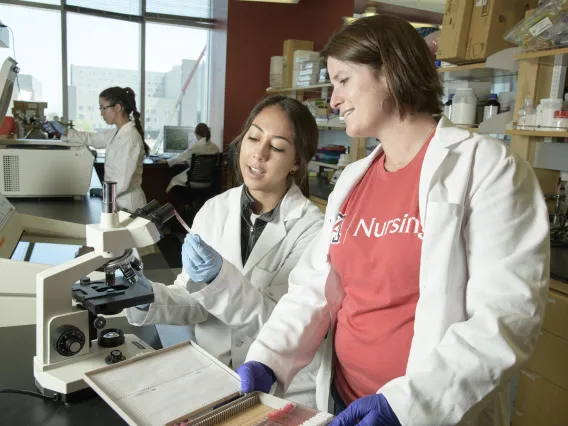
Our faculty includes diverse professionals with expertise in clinical practice, research, and teaching. Nursing students can choose from a broad array of courses that support and extend their nursing program. Resources available include the Steele Innovative Learning Center, the Instructional Resources Center, the Computer Laboratory, Behavioral Studies Laboratory, Biological Studies Laboratory, and the Office of Research & Scholarship.
Proximity to the Mexican border and tribal communities offers opportunities to serve and learn about health and cultural issues. Clinical sites available in the community and surrounding rural areas include nurse-managed clinics, health maintenance organizations, Indian Health Service sites, community health centers, physician–nurse practitioner practices, mental health centers, health departments, long-term care settings, retirement centers, schools, and acute-care settings.